
· The Nodly team
How often should you use a neck massager?
This answer has two halves: what the device allows, which is fixed, and what your own muscle is asking for, which is not. Here is how to find the second without guessing.
The short answer, and where it comes from
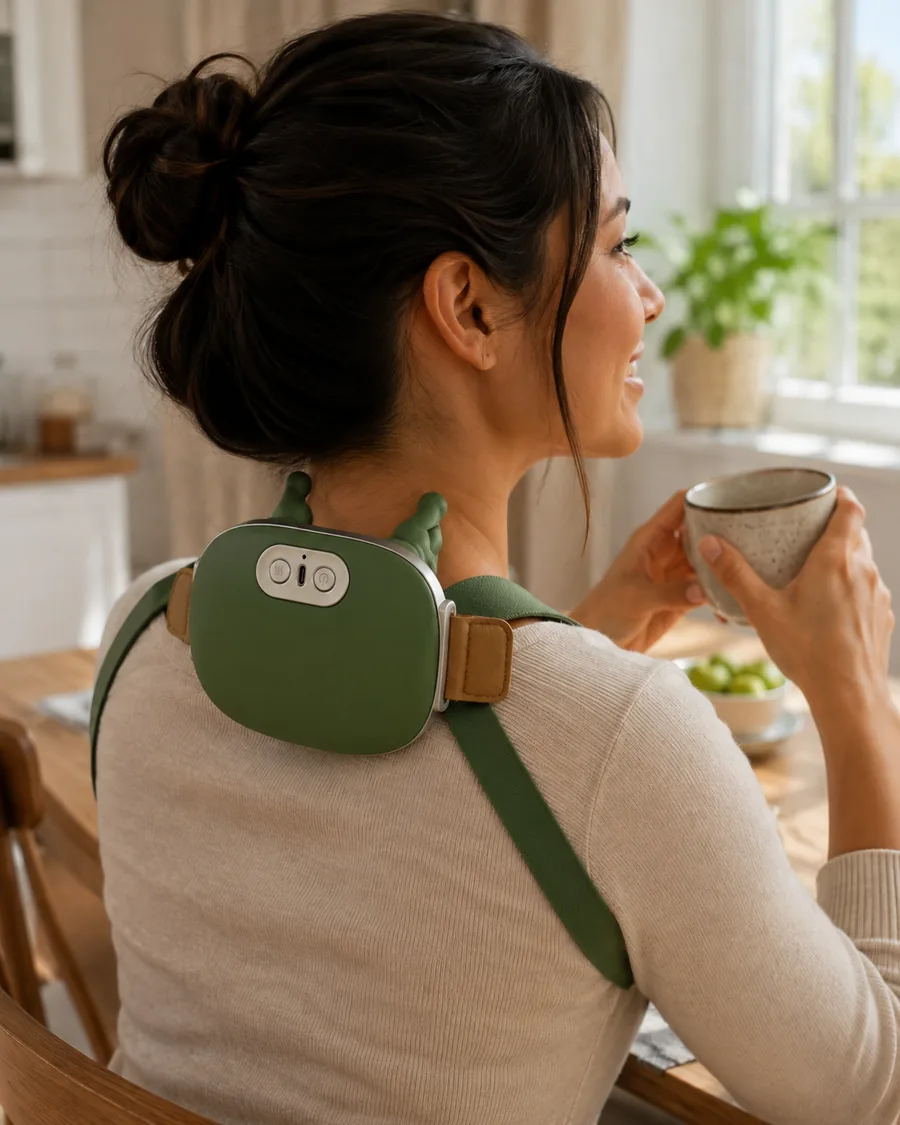
Most people settle on one session a day, in the evening, and stay there. It is the pattern that matches how the problem builds: a muscle held in position through a working day is tightest at the end of it, and the session that helps most is the one closest to the moment it tightened.
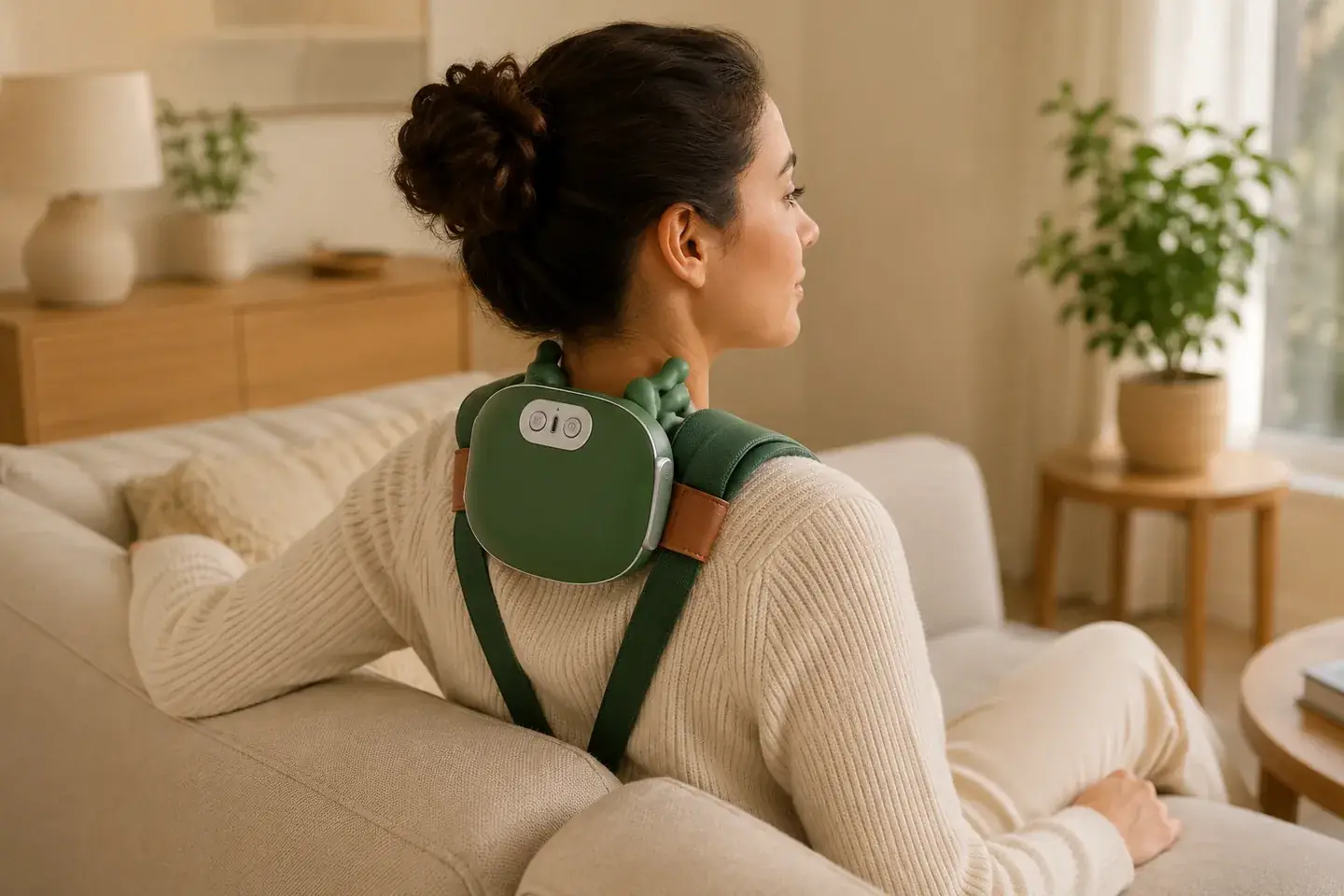
The device narrows the question for you. A session runs ten minutes with automatic shut-off, so there is nothing to time and no way to lose track. What remains is how many sessions, and how firm — and both of those want a gentler first week than most people give them.
The first week
| What to do | Why | |
|---|---|---|
| Session length | Leave it to the device — ten minutes, then it stops | Automatic shut-off removes the usual way people overdo it |
| Sessions per day | One, and resist a second straight away | One buyer advises fifteen to thirty minutes in total the first few times |
| Firmness | First mode, strap buckled a little loose | Buyers who found it too strong almost always started at the top |
| Heat | Off for the first session, then add it | It changes how firm the same mode feels |
| If anything feels sharp | Stop | Firm is the goal; sharp is a different signal |
None of that is caution for its own sake. A muscle that has not been worked in months responds to a first session the way an unused body responds to a first run, and the people who abandon a device in week one are almost always the people who started at the top of everything at once.
After the first week
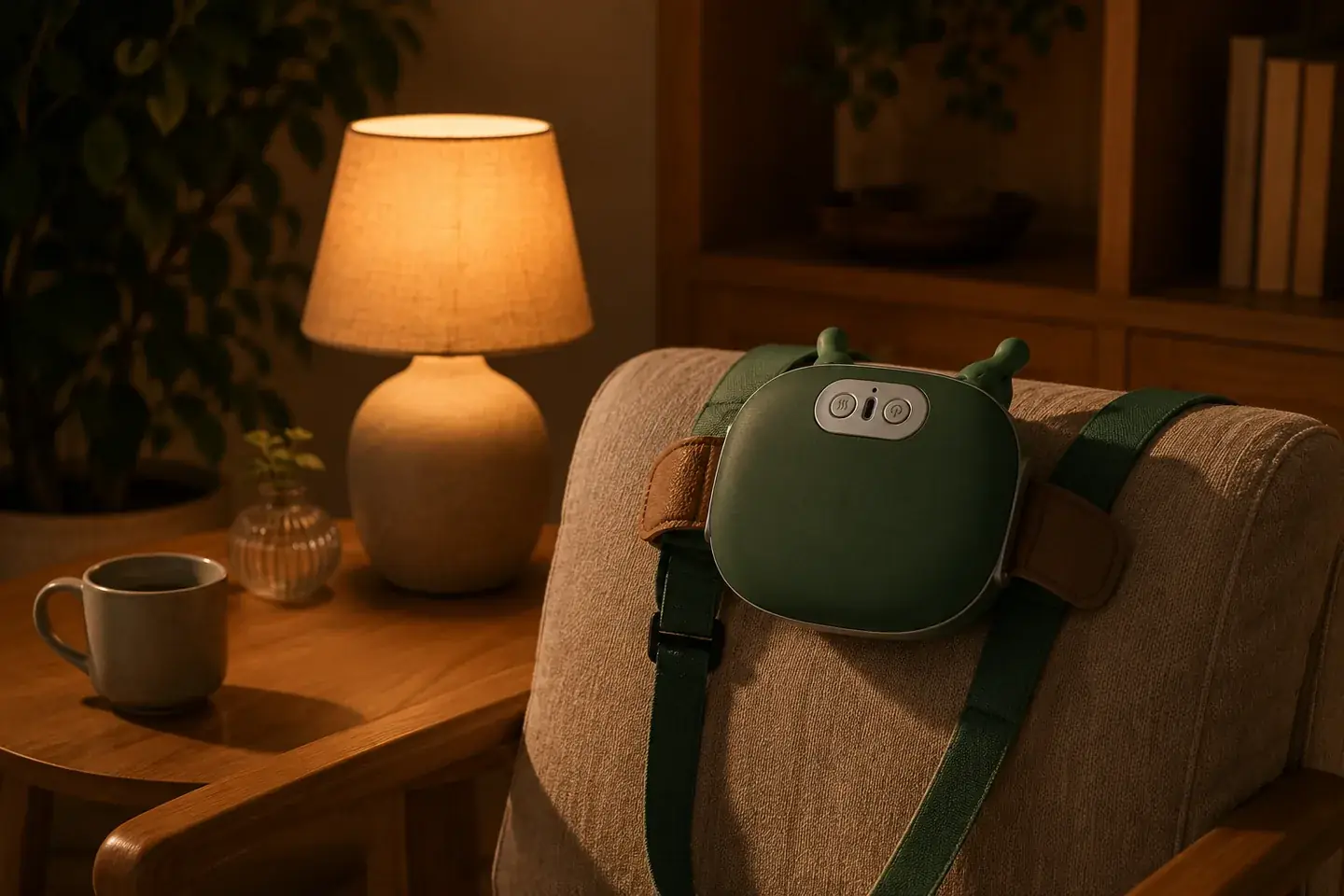
Once you know how the firmness sits on you, the useful rhythm is the one that matches your own pattern rather than a schedule. Some people want it every evening. Some want it on the three days a week that involve long meetings or a long drive. Some use it twice on a bad day and not at all on a good one, and that is a perfectly sensible way to own a device that costs nothing to run.
The one habit worth keeping is short and often over long and rare. The mechanism is interrupting a contraction, and a contraction that rebuilds daily is answered better by ten minutes a day than by an hour on Sunday. This is the same argument as the one for owning a device at all, laid out in where a massager earns its place.
Reading your own signals
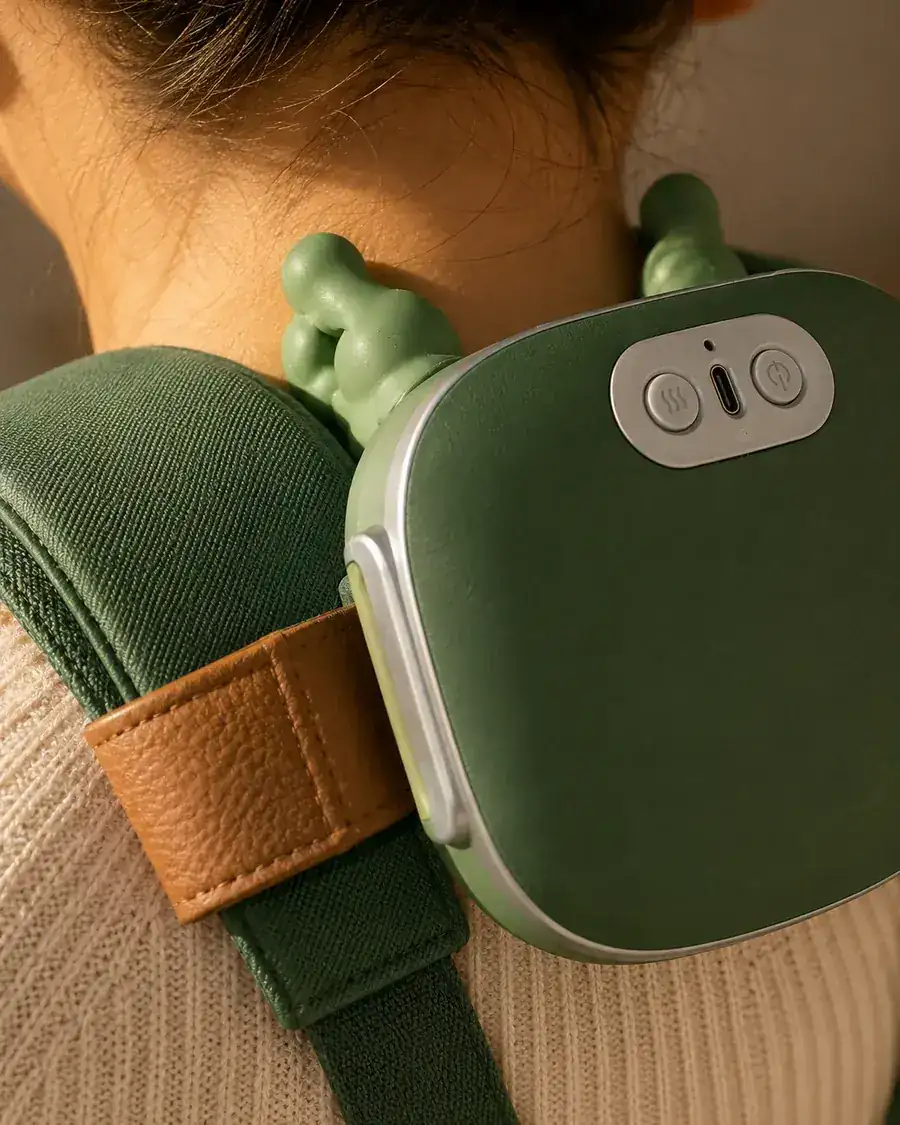
Firm pressure that you feel clearly and that leaves the area looser afterwards is what you are aiming for. Soreness the next day, the way a muscle is sore after unfamiliar work, means the session was too long or too firm for where you are — reduce one of them rather than both, so you learn which. Sharp sensation during a session is not a matter of degree: stop, loosen the strap, and reposition so the fingers are on muscle rather than on bone.
Anything that is not muscular does not belong in this calculation at all. Pain that is sharp, that radiates down an arm, that comes with pins and needles or weakness, or that follows an injury, is a question for a clinician rather than a scheduling question. The manual is explicit that this is a personal care item and cannot replace medication or medical equipment, and the full precautions are in the safety guide.
What the battery allows
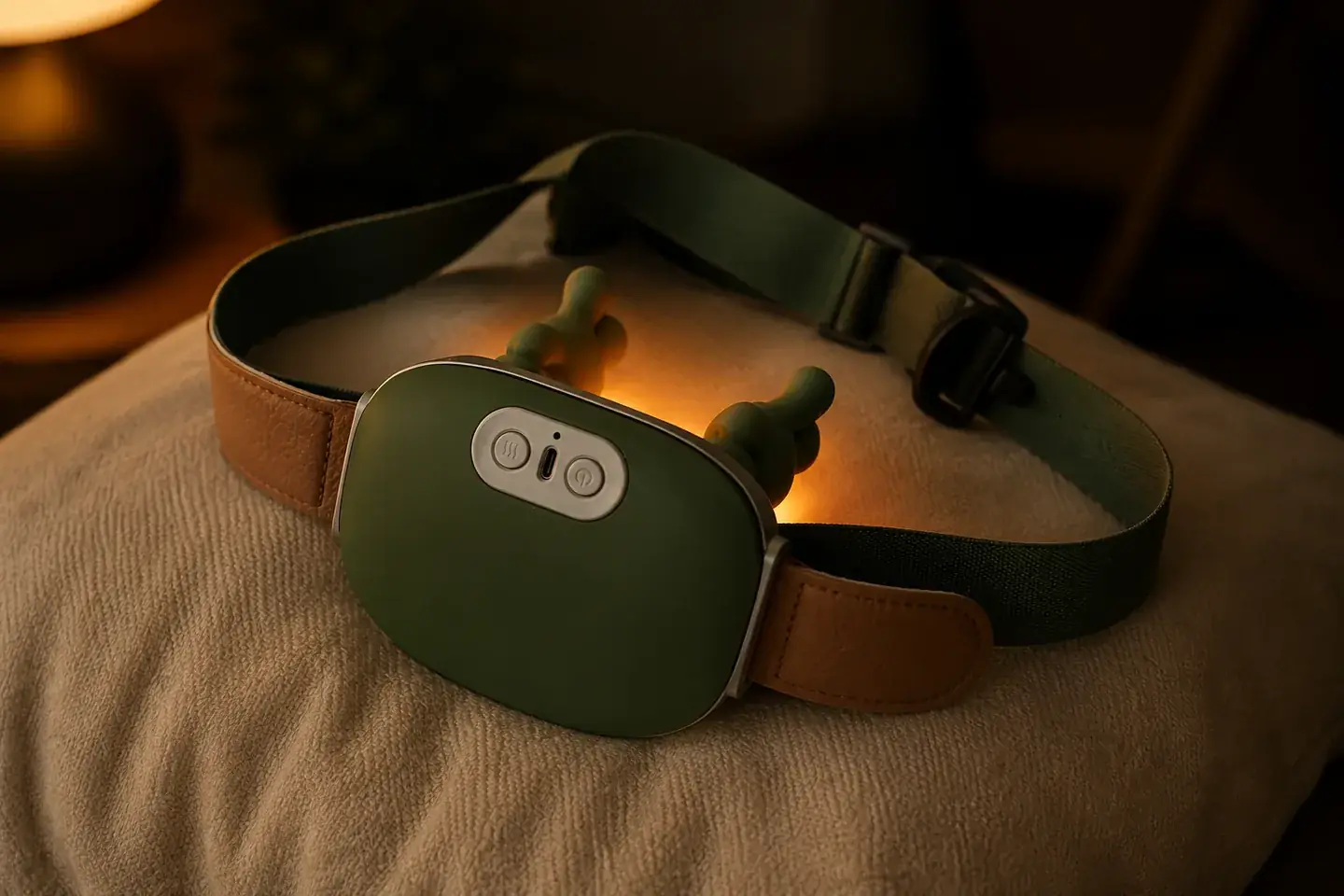
Charging is rarely the constraint, but it is worth knowing the shape of it. The battery is 2,000 mAh and a full charge takes about three hours, with a red light while charging that turns white when it is done. The device does not run while plugged in, so charging happens between sessions rather than during them. Running the heat draws more than the kneading alone, so a run of heated winter evenings needs the cable sooner than a run of unheated summer ones. More on that on the cordless page.
Why any of this is worth a routine
Because the underlying problem is a recurring one rather than an event. A cross-sectional study of 413 office workers published in 2022 put the twelve-month prevalence of neck pain at 63.9% — which is to say that for most people in that population it is not a question of whether the neck tightens but of what happens the next time it does. A ten-minute habit answers that better than a good intention.