
· The Nodly team
How a neck massager works on a tight muscle
This is the mechanism explained properly, in the order it happens: what a stiff neck physically is, what pressure does to it, and how to tell whether your own neck is asking about muscle or about something else.
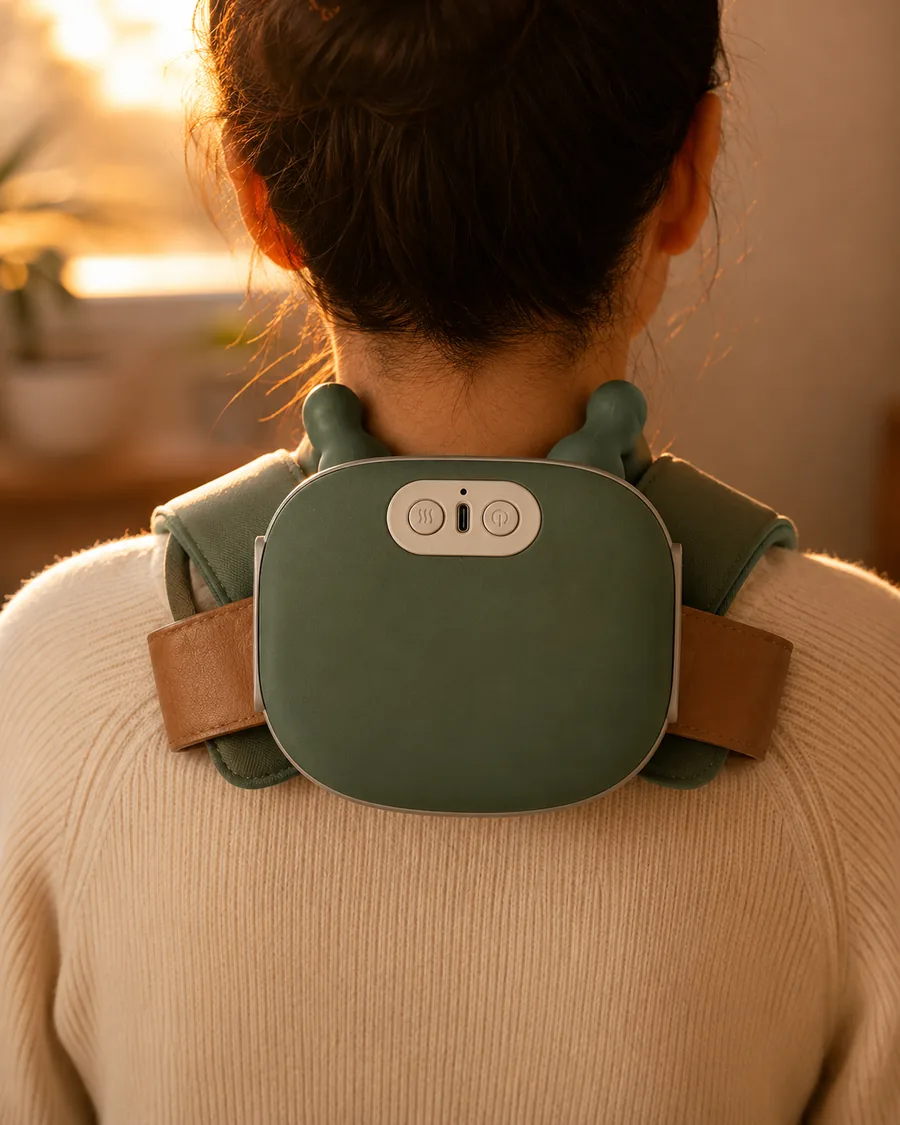
What is actually happening in a stiff neck
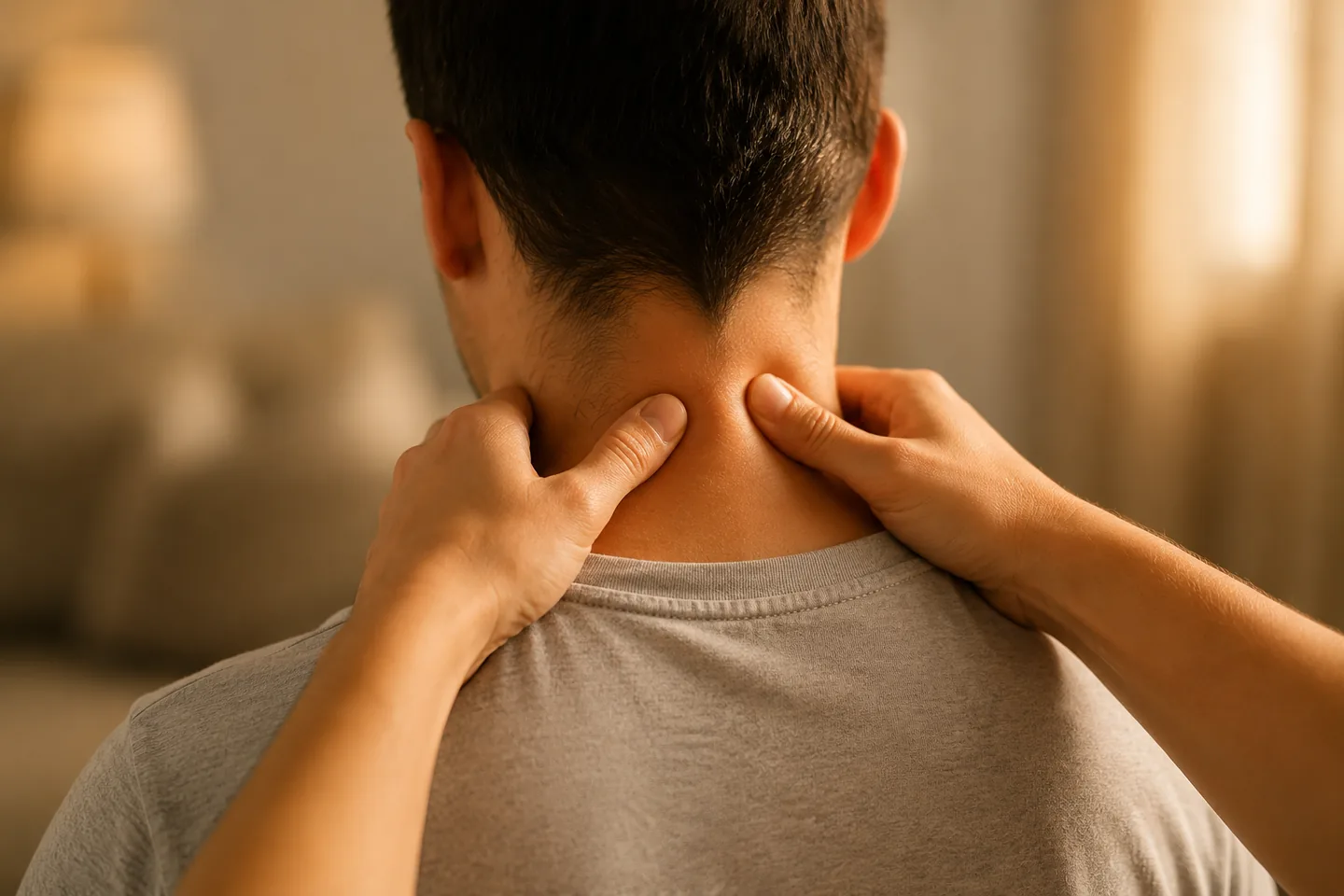
A muscle held in one position for hours does not tear and does not inflame. It simply does not let go. The upper trapezius, which is the band running from the base of the skull out across the top of each shoulder, spends a working day resisting the weight of the head and the position of the arms. By the evening it is shorter and harder than it was at breakfast, and the sensation refers upward, which is why people describe a shoulder problem as a stiff neck.
This matters because it tells you what an intervention has to do. It is not a wound to be healed. It is a contraction to be interrupted, and what interrupts it is mechanical: pressure into the tissue, held briefly, then released, repeatedly. That is what a pair of thumbs does, what a massage therapist is trained to do far better, and what a kneading device imitates.
The scale of the thing, and why the market exists
This is not a niche complaint. A cross-sectional study of 413 office workers published in 2022 found a twelve-month neck pain prevalence of 63.9%, which sits inside the range other studies of the same population report. Worldwide, the World Health Organization puts the number of people living with neck pain at 222 million, drawing on the Global Burden of Disease work.
The workplace figures are the ones that show what it costs. In Great Britain, the Health and Safety Executive recorded 511,000 cases of work-related musculoskeletal disorder in 2024/25, of which 211,000 principally affected the upper limbs or neck — 41% of the total, and 34% of all working days lost to work-related ill health.
What a device does, and what it does not
| What to expect | |
|---|---|
| Muscular tightness across the neck and shoulders | This is what the mechanism addresses |
| Stiffness that builds through the working day | Responds to short sessions, repeated |
| A general sense of a tense evening | Warmth carries most of this |
| Sharp pain, or pain that radiates down an arm | A question for a clinician, not a device |
| Pain following an injury or a fall | A question for a clinician |
| Any pain that is new, severe, or not settling | A question for a clinician |
The bottom three rows are the important ones. A device has no way of telling a contracted muscle from anything else, so the judgement has to be yours before you put it on. The manual supplied with ours is explicit that it is a personal care item and cannot replace medication or medical equipment, and that is worth reading as written rather than as boilerplate.
Why repetition is the whole argument
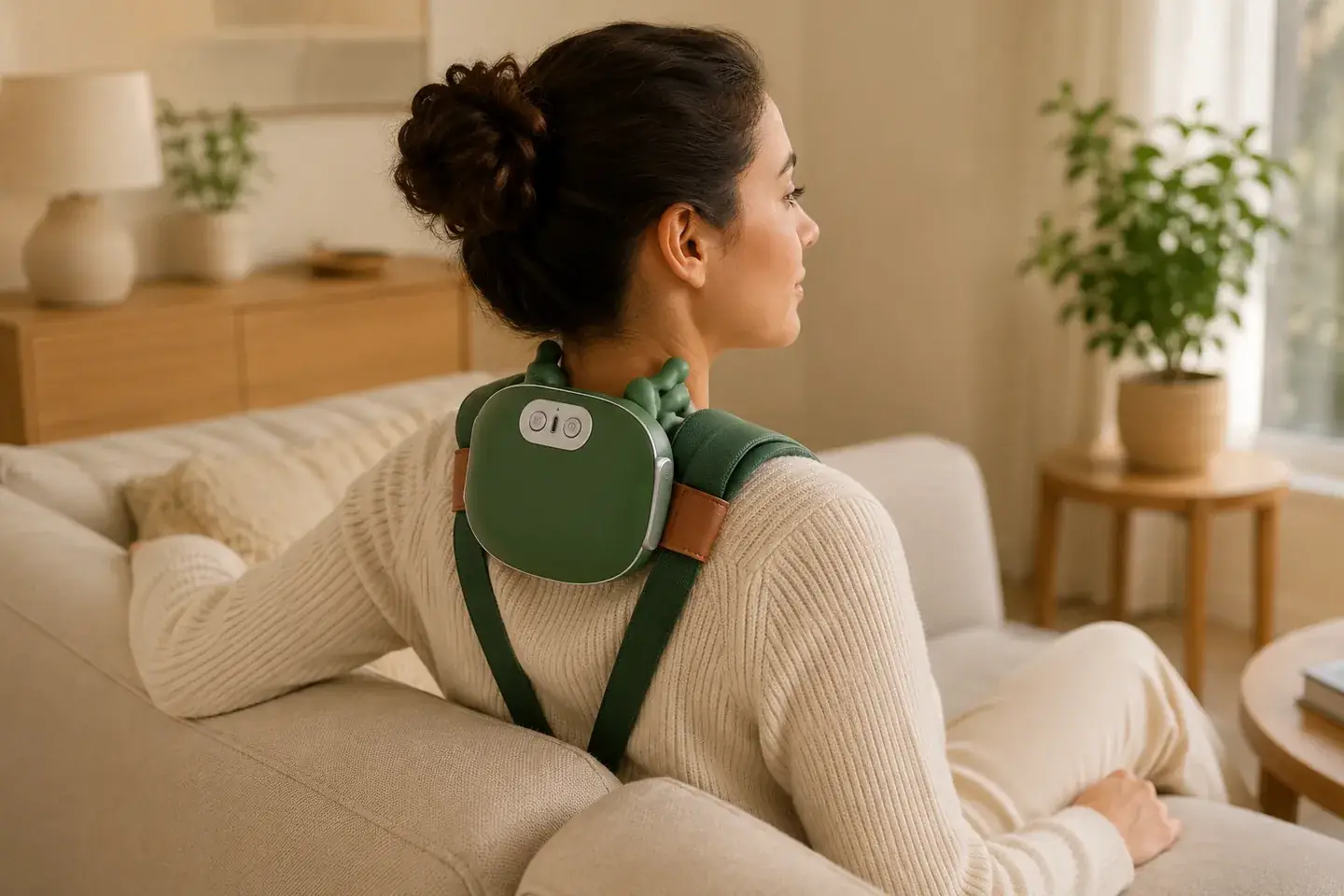
A stretch works. A hot shower works. An appointment with someone trained works better than either. All three share one limit: they happen once, and a contraction that rebuilds itself every working day is not a once problem. Ask anyone whose neck has been tight for a year what happened after their last massage, and the answer is that it was wonderful and it came back by Thursday.
What actually shifts it is frequency — a short session at the moment the tightness appears rather than two weeks later when it has settled in. That is a low bar for effectiveness per session and a high bar for availability, and it is the reverse of how this category is usually sold. A device does less than a trained pair of hands and it is on the sofa at nine in the evening, which turns out to be the half that changes the outcome.
Kneading against vibration
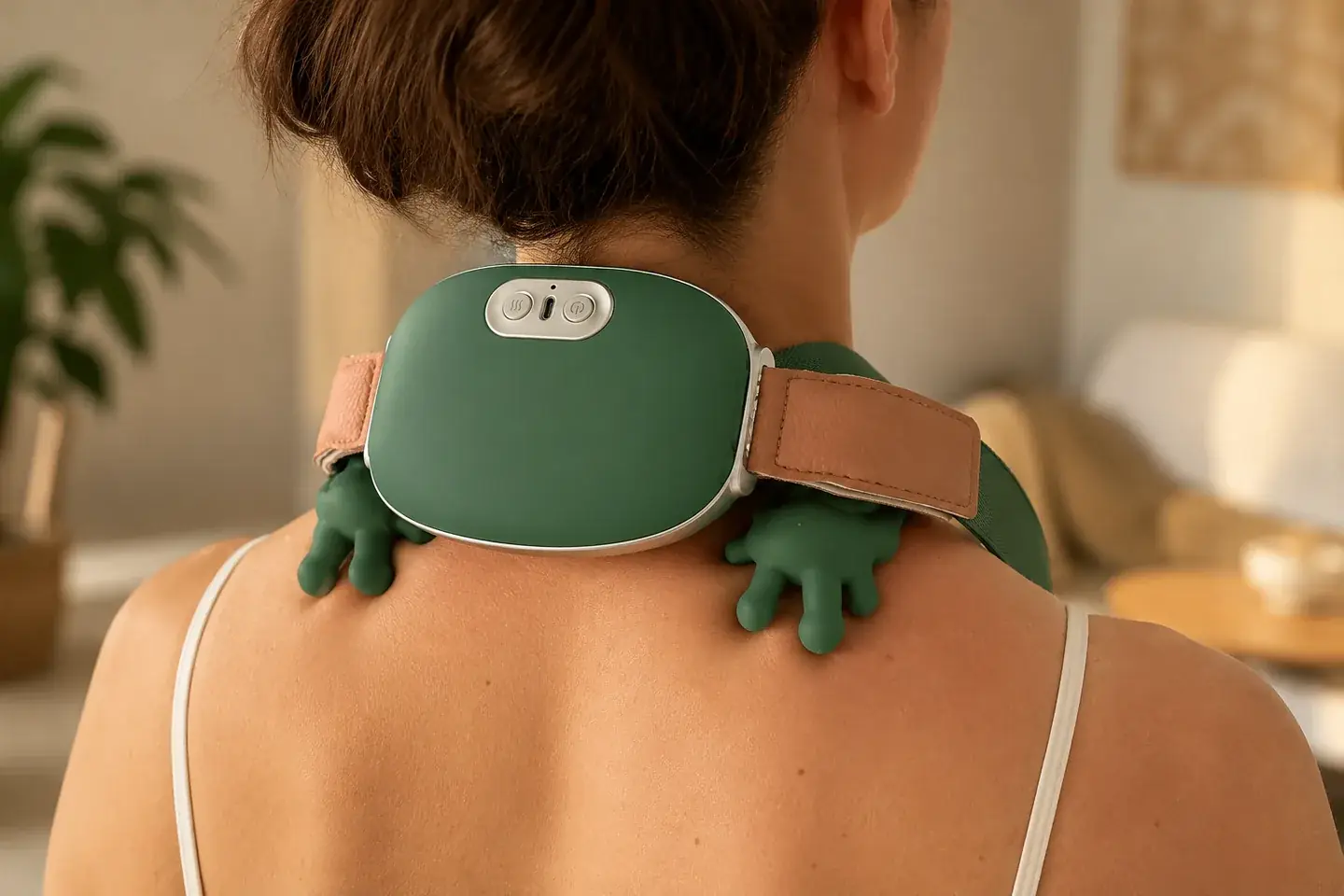
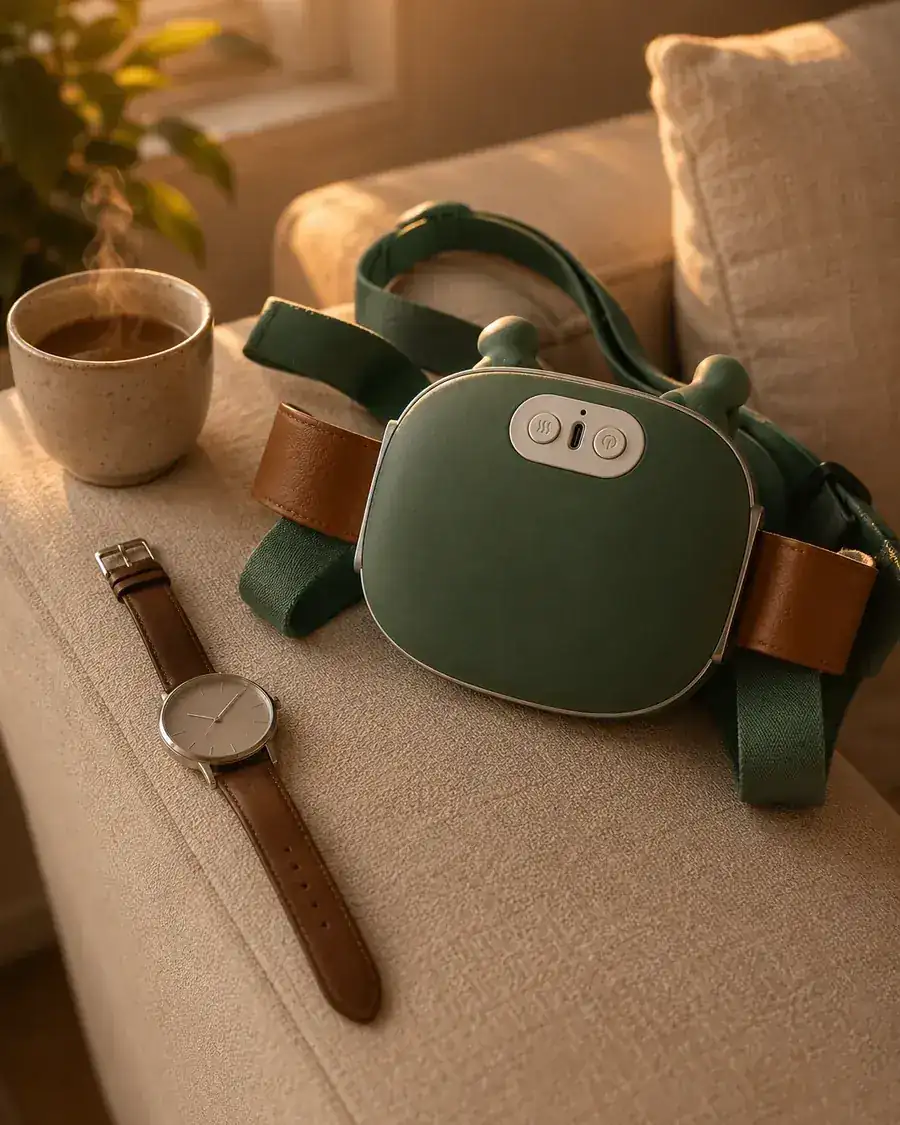
Not everything sold for a stiff neck works the same way, and the difference is larger than the marketing suggests. Vibration shakes a housing, the housing shakes the skin, and the energy spreads thinly across everything it touches. It is pleasant. Kneading applies pressure to one point, holds it, and releases — which is the physical event described above. If you are judging whether a device will work, this is the first thing to check, and it is visible in any product photograph: count the contact points standing proud of the surface. We go through it properly on the shiatsu page.
What buyers report after they have had one a while
The reports that recur about ours are about firmness rather than novelty. One buyer writes that it massages very firmly and you feel it clearly, even on a slim neck. Another describes it as like two hands on the neck, and adds that it works elsewhere on the body too. A third says it is effective and very powerful but not unpleasant, and notes it may be too strong for some people — which is a useful warning, and the reason we suggest starting on the first mode with the strap slightly loose.
Two limits come up as often: the battery arrives empty, and the arms do not open wide enough outwards to work the upper back. The eleven reviews we hold are on the reviews page.
So: does it work
For a muscle that is tight because it has been held in one position, yes, and the reason has nothing to do with how advanced the device is. It works because it is available. If your tightness is muscular and recurring, the useful question is not whether a massager works but whether this particular one will still be within reach in six weeks, and that is decided by shape and charging rather than by mechanism. There is a checklist for it in how to choose a neck massager, and the arithmetic in where it earns its place.