
A cordless neck massager, and why the cable was the problem
Cordless reads like a convenience feature and behaves like a usage feature. The question a device has to survive is not whether it works, but whether it is within reach at the moment your shoulders tighten — and a cable answers that question for you, usually in the wrong direction.
What a cable actually costs you
A corded device is used in the room with the right socket, at a time when nobody else needs that space, with a lead running across the floor. None of that stops anyone using it once. All of it stops someone using it four times a week for a month, which is the frequency at which a stiff neck actually changes.
That is the whole argument, and it is worth stating plainly because cordless is usually filed under convenience alongside color options. It is not a comfort feature. It is the difference between a device that lives on the sofa and a device that lives in a cupboard near a socket.
The numbers, and where they come from
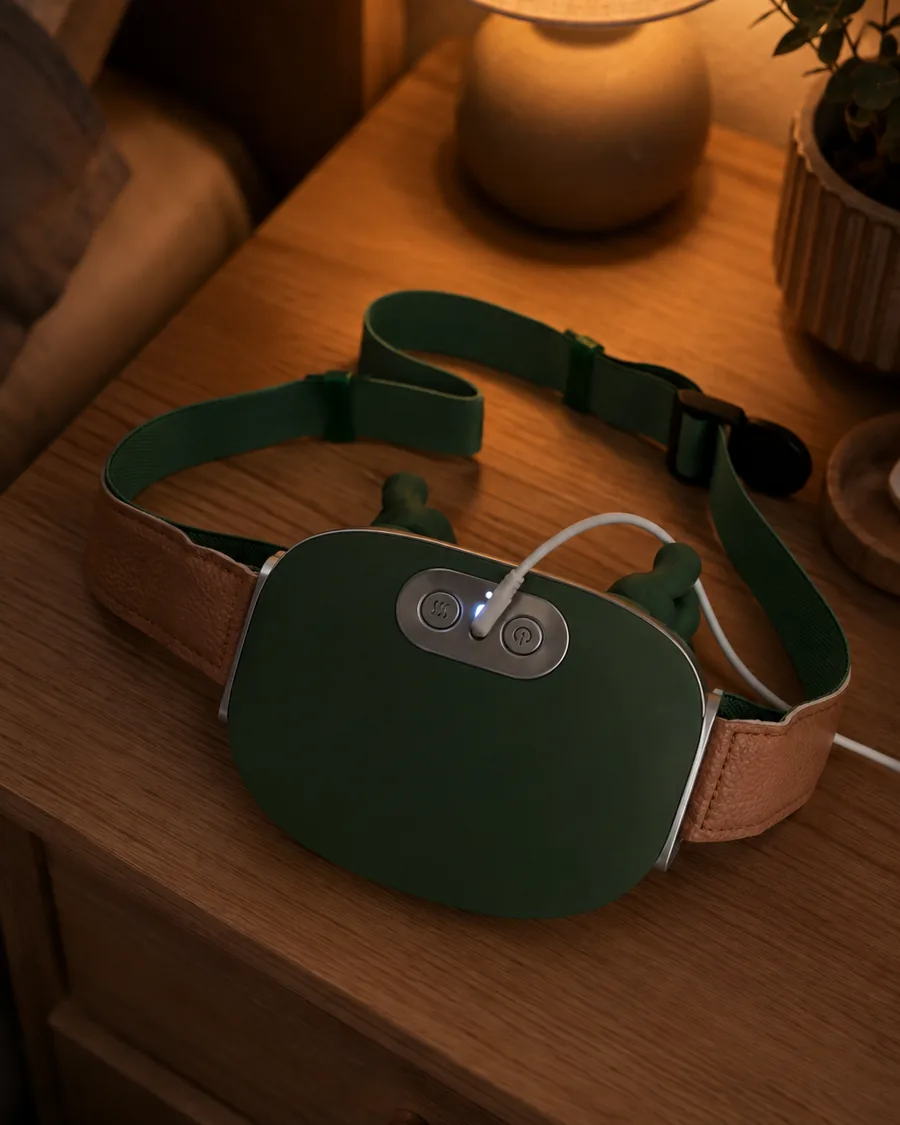
| What to expect | Source | |
|---|---|---|
| Battery | 2,000 mAh lithium-ion | Manual supplied with the device |
| Full charge | About three hours | A buyer timed it at three hours |
| Charge indicator | Red while charging, white when done | Manual |
| Running while plugged in | It does not | Manual, stated explicitly |
| Session length | Ten minutes, then automatic shut-off | Manual |
| Sessions per charge | Depends on how much you run the heat | The heating draws more than the kneading alone |
| Charged on arrival | No | Reported by several buyers |
| Weight | 1.7 lb (760 g) | Manual |
Two of those rows are worth pausing on. The empty battery is the one that affects your first evening, and it is the row you will not find on a specification sheet. The sessions per charge row carries a range rather than a figure, because the heat draws more than the kneading alone and a single number would be wrong for half the people reading it.
Cordless, portable and handheld are three different words
They get used interchangeably in listings and they describe different things. Cordless means no cable during use. Portable means it travels — a function of weight and shape more than of the battery. Handheld means you hold it, which is a separate design decision entirely and the one that most affects whether a device gets used.
A handheld device asks the arm to hold a weight steady, shoulder raised, for the length of the session — the same static work that tightens the shoulders in the first place. A shoulder-worn device rests on you, and your hands do nothing more than hold two straps at whatever tension suits. Ours is cordless and hands free; it travels well because it folds flat, but the hands-free part is the one that changes the habit.
Where it gets used, once nothing is holding it back
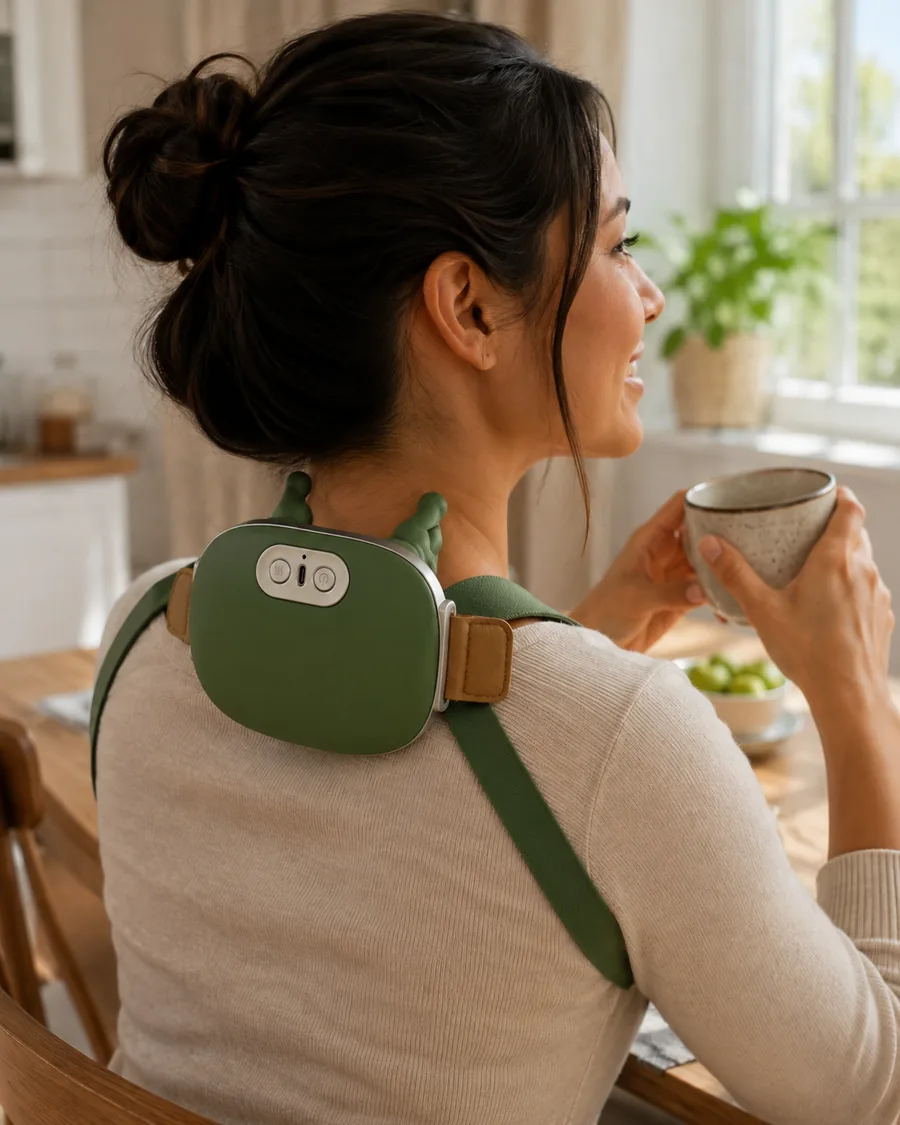
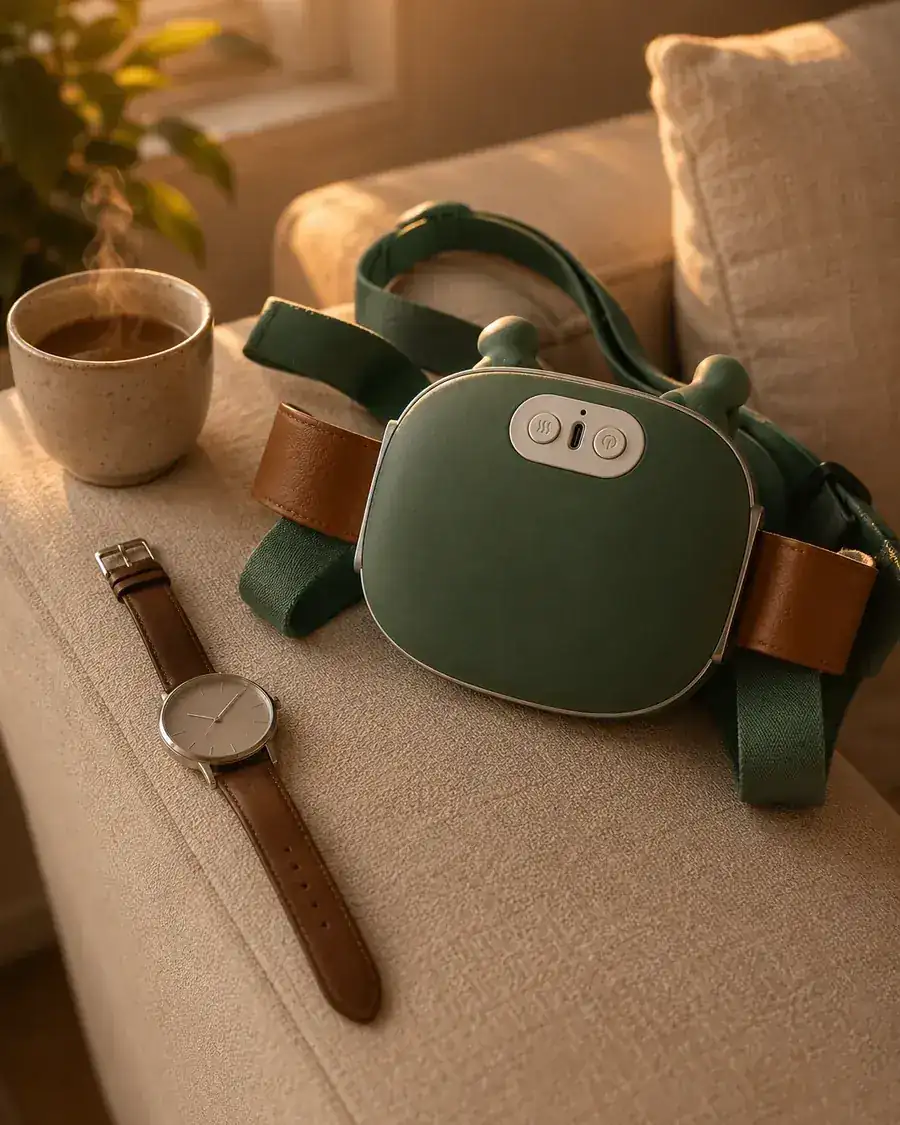
On the sofa at nine in the evening, which is the answer most people give. At a desk between two meetings, which is where the tightness usually starts — there is a short routine for that on the desk guide. In a passenger seat on a long drive. And, once people discover it, over the calves after a day standing, a zone that appears in none of the documentation we hold and that was confirmed in use.
The full map of zones is on the product page, with the one zone it does not reach listed alongside the ones it does.
Looking after the battery
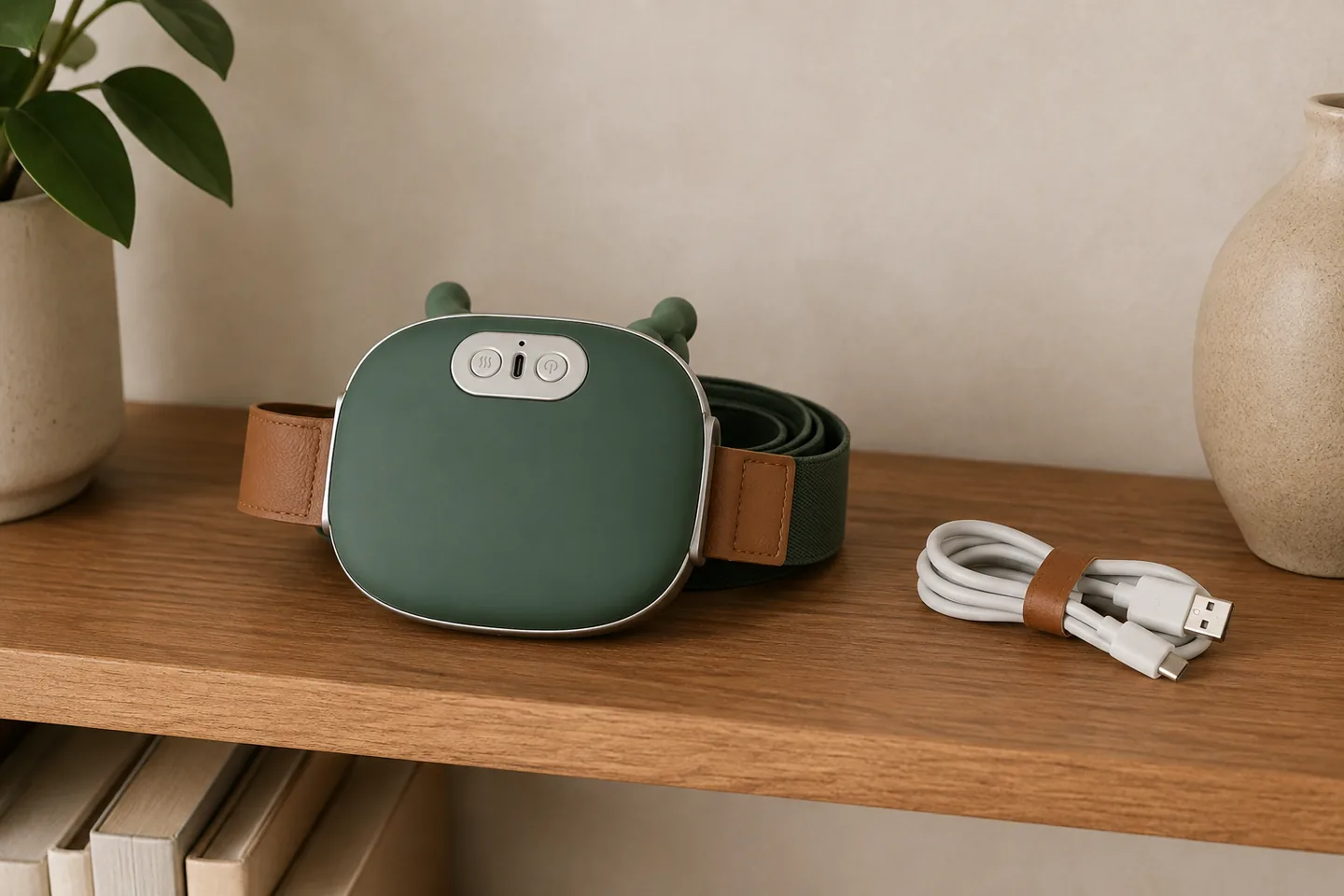
Nothing exotic. Charge it when it runs down rather than topping it up after every short session, keep it out of a hot car in summer, and if it is going to sit unused for a couple of months, leave it part-charged rather than empty. A device that spends six months flat in a drawer is the one that disappoints two years from now.
If the charge starts covering noticeably fewer sessions than it used to, that is the normal arc of any lithium battery rather than a fault, and it happens slowly. Every order carries thirty days to change your mind with return shipping on us, and the full terms are on the refund page.
Setting it up on the first evening
Plug it in and leave it for three hours. Then sit down, rest it over the shoulders with the fingers on the muscle rather than the spine, and close the buckle loosely. Start on the first mode with the heat off, give it a minute, and add either from there. A session runs ten minutes and stops on its own, so there is nothing to time. Set the mode and the heat before you settle back, because reaching a control on something resting on your own neck means raising an arm.
Battery and charging
How long does a cordless neck massager take to charge?
About three hours from empty, on a 2,000 mAh battery. A red light shows while it charges and turns white when it is full. Running the heat draws more than the kneading alone, so a run of heated evenings will need charging sooner than a run of unheated ones.
Does it arrive charged?
No. It ships with an empty battery, which is standard for devices sent by air, so plug it in before anything else. Several buyers mention this and it is the single most common surprise on opening the box — worth planning around if it lands on a Friday evening.
Can I use it while it charges?
No — the manual is explicit that it does not run while charging, and that is a design choice rather than an oversight: a cable running to a wall would put you back where the socket is. Charge it between sessions. A red light shows while it charges and turns white when it is done.
Is a cordless massager weaker than a corded one?
Not in this category. One buyer describes ours as effective and very powerful but not unpleasant, and another notes it works firmly even on a slim neck. The firmness you feel comes mostly from how tightly the strap is buckled, which is a mechanical arrangement rather than an electrical one.