
· The Nodly team
How to work your own neck and shoulders
You can do a useful amount with your own hands, and knowing how is worth it even if you own a device — mostly because it teaches you where your own tightness actually sits, which is rarely where people first reach for it.
Find the band before you work it
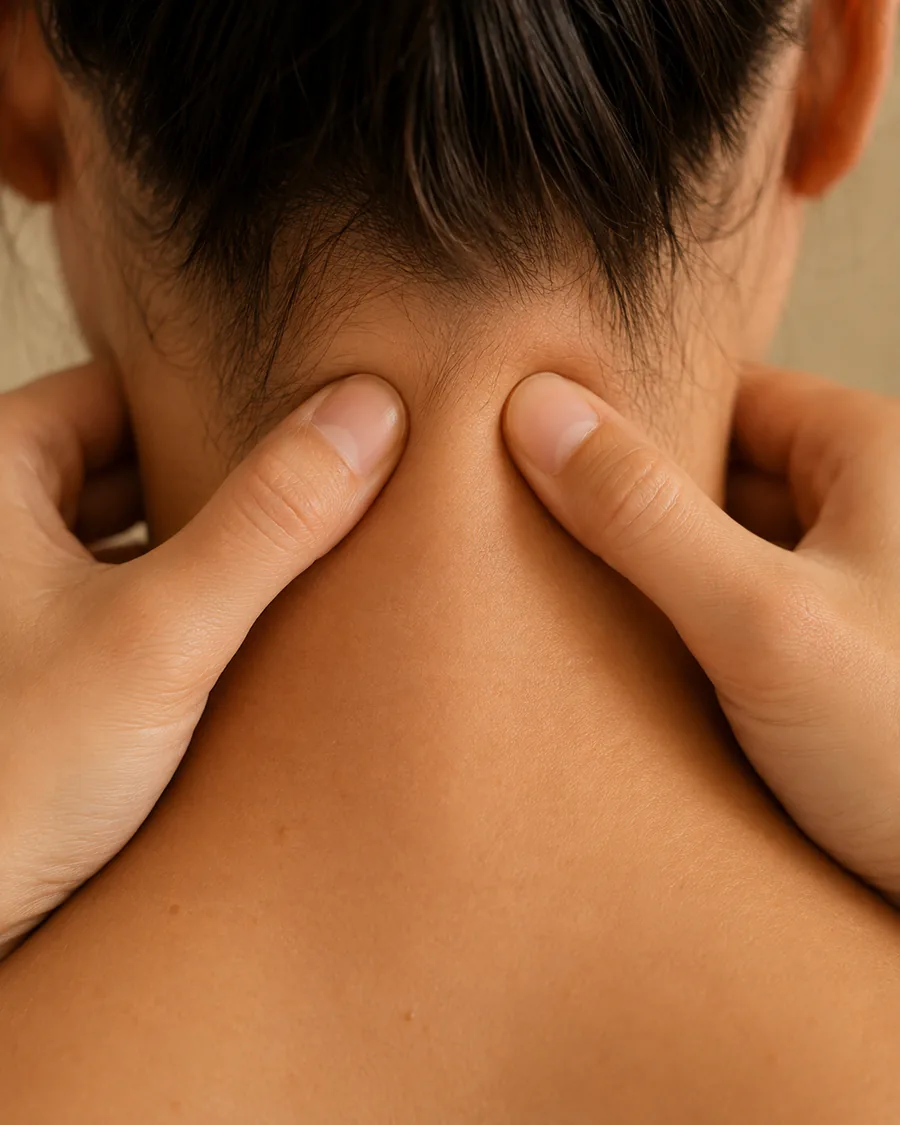
Reach across your body with your right hand and let it fall onto your left shoulder, fingers in front and thumb behind. Under your palm, running from the base of your skull out towards the point of the shoulder, is the upper trapezius. That is the band. Squeeze gently and move outward an inch at a time, and somewhere along it you will find the part that objects. For most people who spend a day at a screen, it is not at the neck end.
This is the single most useful thing to know, and it changes what you do next. People reach for the back of the neck because that is where the sensation is loudest, but the tissue that is short and hard is usually further out across the shoulder. Working the place that hurts rather than the place that is tight is why self-massage often feels like it is not doing much.
The technique, such as it is
| Step | What to do |
|---|---|
| Sit | Upright, shoulders down, the arm you are not using resting on your lap |
| Reach across | Opposite hand on the shoulder, fingers in front, thumb behind |
| Squeeze and release | A slow grip, held two or three seconds, then let go. Not a rub |
| Move outward | An inch at a time along the band, repeating the squeeze |
| Stay on muscle | Off the spine, off the front of the throat |
| Time | Two or three minutes a side is plenty |
| Then swap | The other side almost always feels different |
Squeeze and release rather than rub. Rubbing warms the skin and does very little to the muscle underneath; a held squeeze is pressure into the tissue, which is the mechanical event that matters. If you take one thing from this page, take that.
Two things to stay away from
The front and sides of the throat are not part of this. There is no useful muscle to work there and a good deal that is not muscle. And keep pressure off the spine itself — the bumps you can feel down the middle are vertebrae, and the tissue worth working is the column of muscle either side of them.
The general rule is the same one that applies to any device: firm is fine, sharp is not. If the sensation is sharp, or if it radiates down an arm, or comes with pins and needles or weakness, stop, and treat that as a question for a clinician rather than a technique problem. The safety guide has the full list.
Why hands run out before the muscle does
Doing this properly takes an arm held up and across the body, shoulder raised, gripping — which is close to a description of the static work that tightened your shoulders in the first place. Two or three minutes a side is genuinely useful. Fifteen minutes twice a day, every day, is not something anyone sustains, and it works the shoulder you are using while it helps the one you are not.
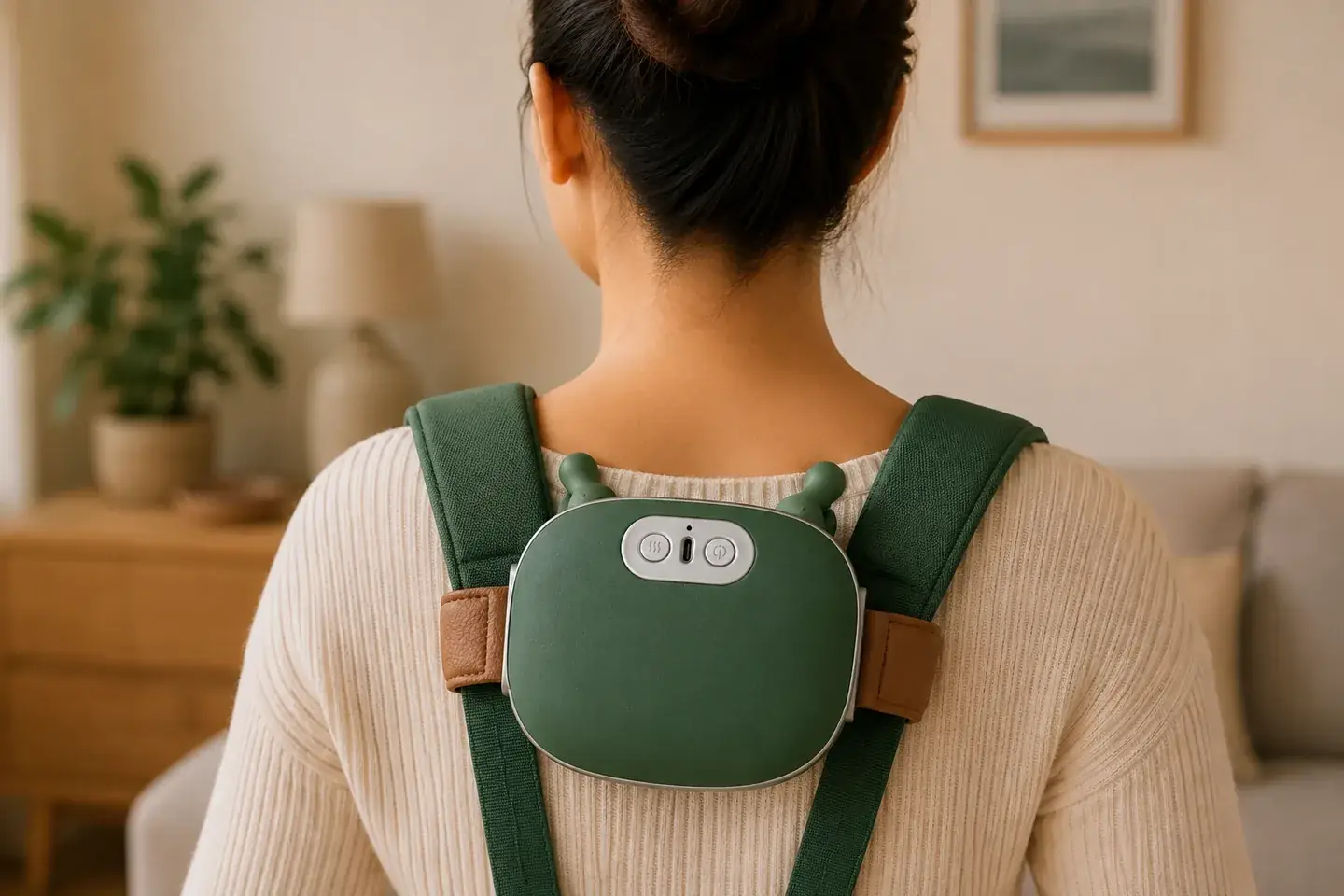
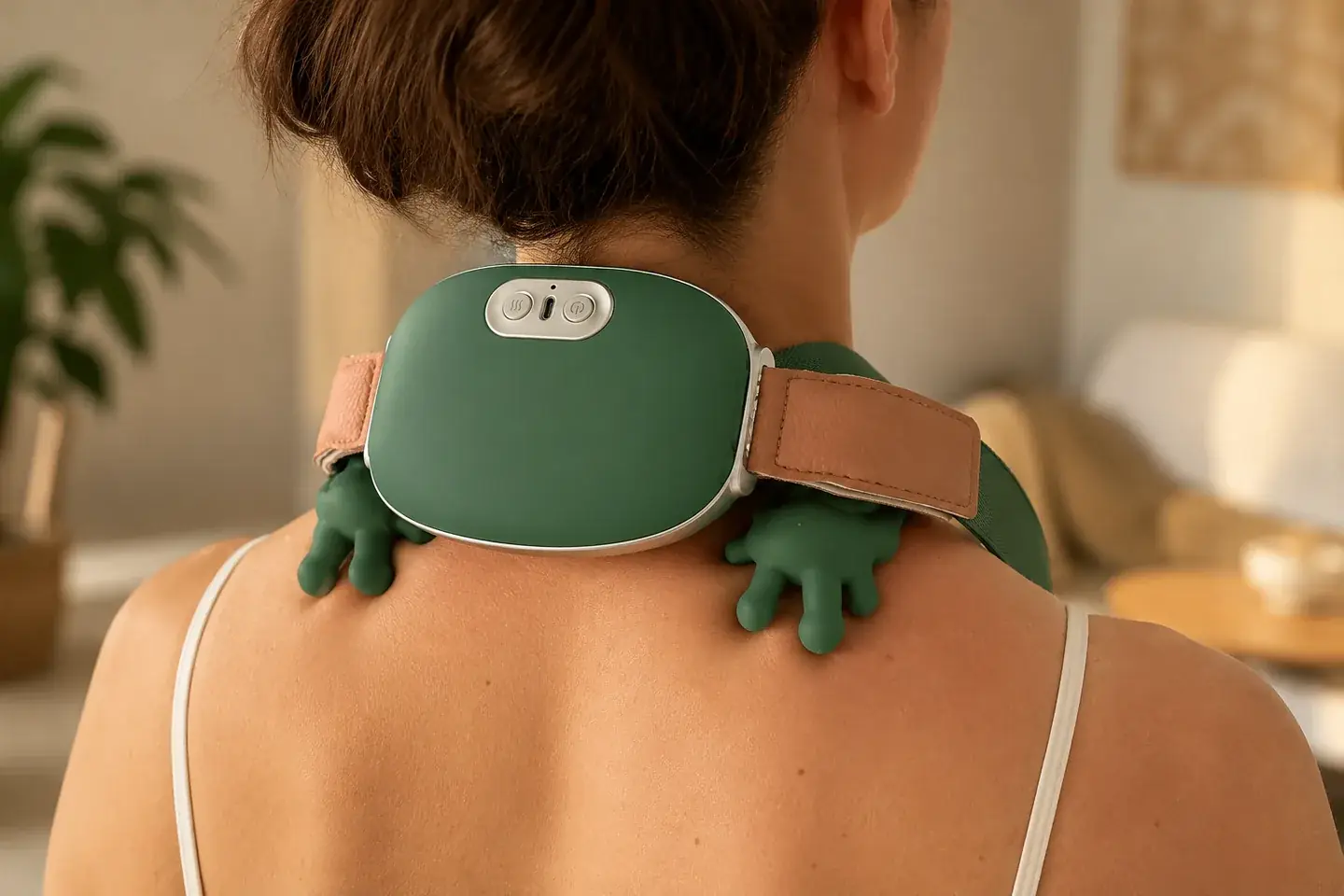
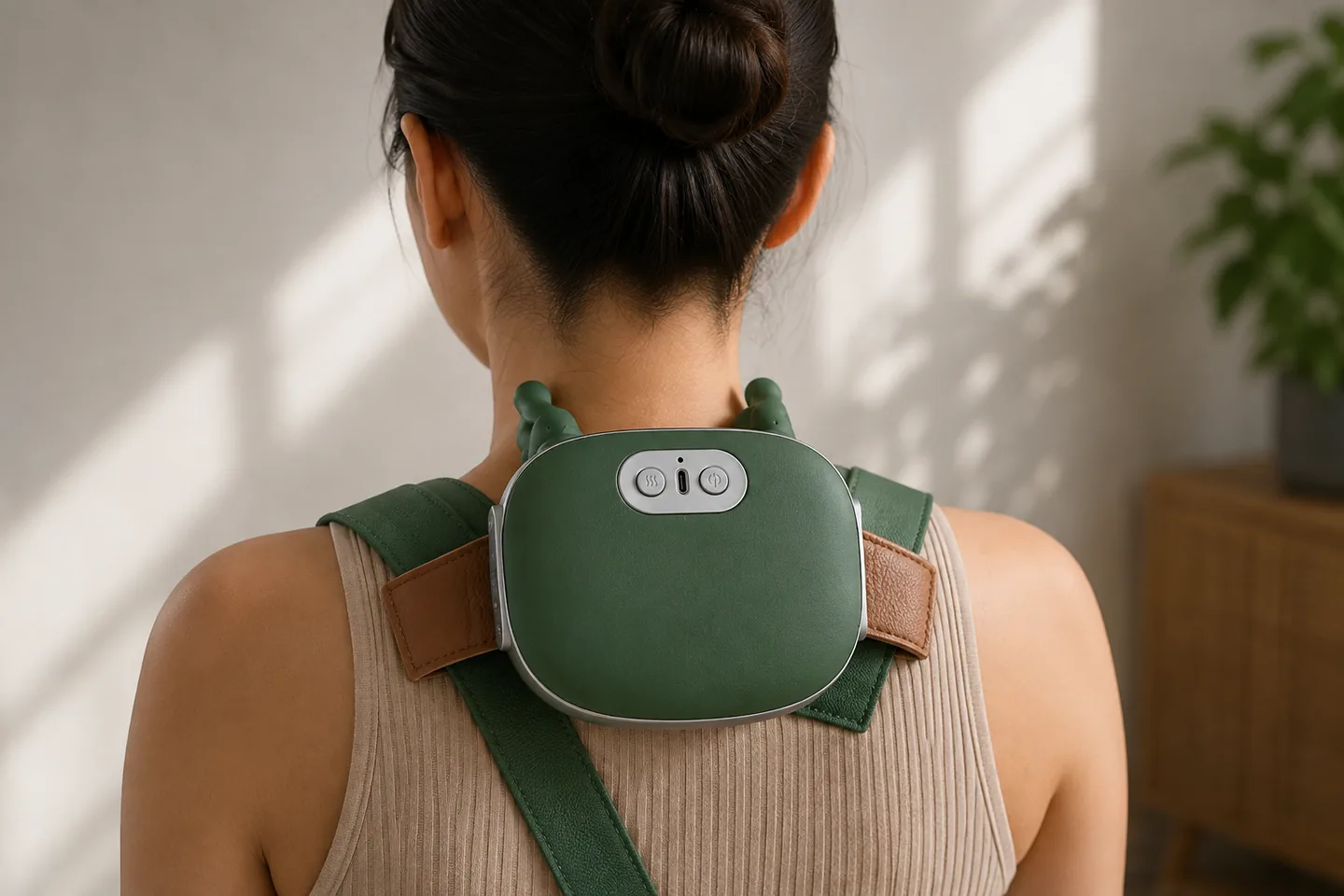
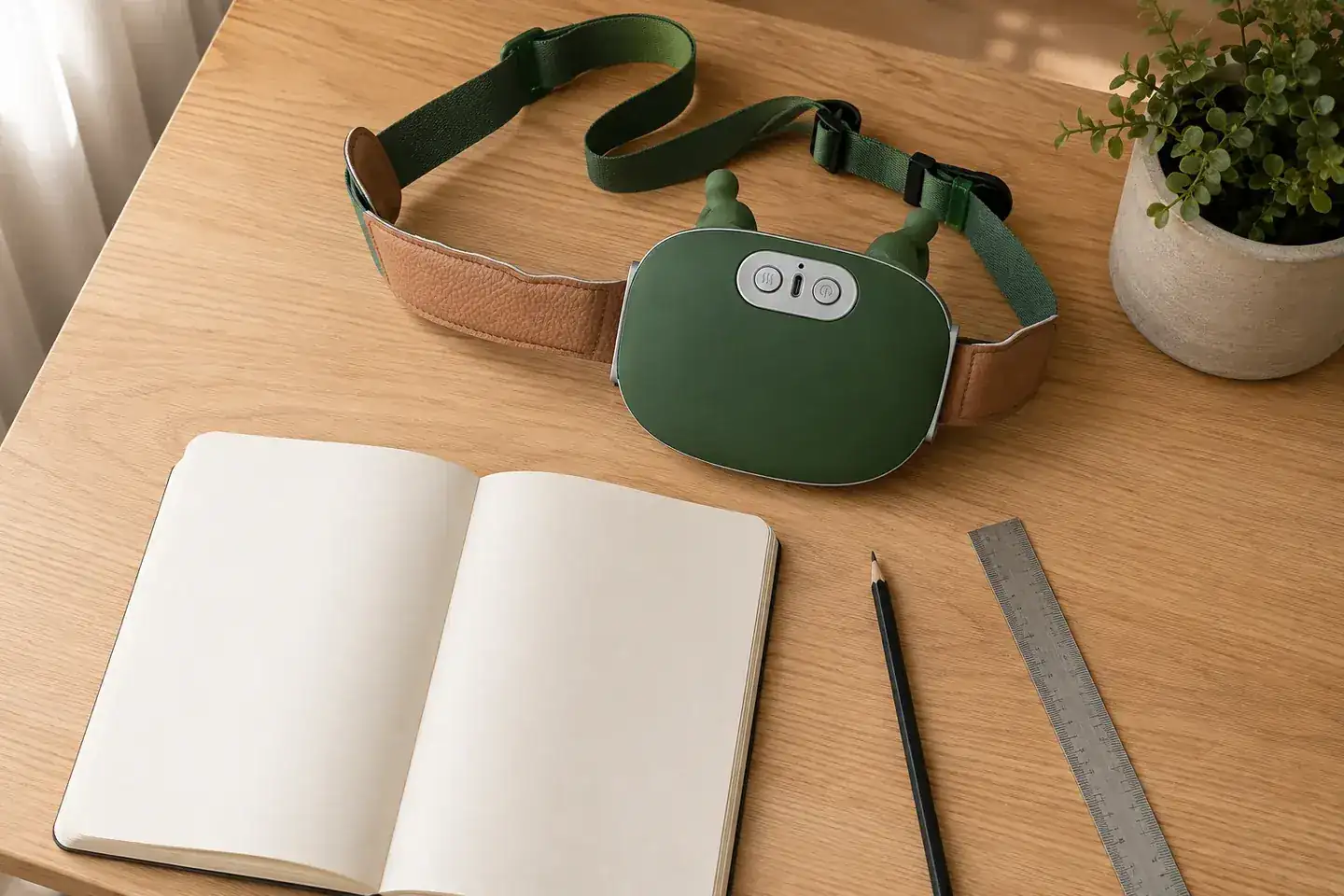
That is the whole practical case for a device, and it is narrower than the usual one. It is not that a machine does something your hands cannot; your hands are better at finding the spot. It is that a machine can repeat, on both sides at once, without you doing the holding. On ours the two heads are shaped as hands with five silicone fingers each, sitting either side of the spine, so the arrangement is the same one your own hand makes and it runs for ten minutes without your shoulder paying for it.
What to do the rest of the day
None of this competes with the ordinary advice, which remains the highest-value thing on this page: get up regularly, put the screen at a height that does not pull your head forward, support your forearms so the shoulders are not holding the arms up, and move. The scale of the problem is mostly a scale of hours held still — the Health and Safety Executive attributes 34% of all working days lost to work-related ill health in Great Britain to musculoskeletal disorders, with an average of 11.4 days per case.
If you want the short version that fits between two meetings, it is on the desk page.